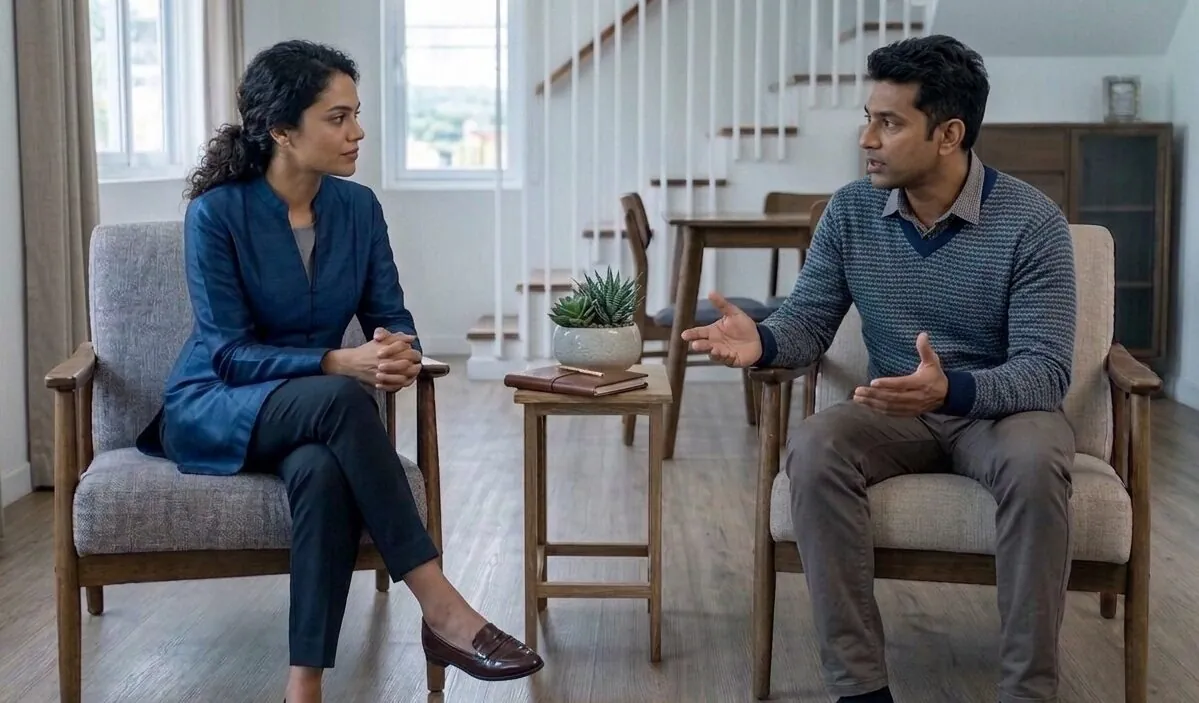
We speak English, Hindi, Punjabi, and Urdu — among other foreign languages.
For many Jain families, a divorce is felt across generations — parents, in-laws, siblings, and often a family business. Crossroads Neutral offers confidential, neutral mediation that keeps those decisions private and helps both spouses reach a fair agreement without the hostility of a courtroom battle.
Whether your family is Gujarati, Marwari, Kutchi, or from another tradition, whether your roots run through India, East Africa, or the UK, and whether you are Shvetambara or Digambara, we approach your family with understanding and without judgment.
A Jain Divorce Mediator who understands family and business
Many Jains describe ahimsa and anekantavada — non-harm, and the recognition that every situation has more than one side — as values they try to live by. Mediation fits naturally with both: each spouse is heard, and the agreement is built together rather than imposed by a judge.
We understand the matters that often shape a Jain divorce: family businesses run with relatives, joint-family and ancestral property in India, gold and gifts from the wedding, money contributed by parents, and how children will be raised in the faith across two homes. We keep the process respectful and confidential so the next chapter can begin with clarity.
Issues that often come up for Jain families
Every family is different, and none of these will apply to everyone. These are among the questions families most often bring to mediation:
Family businesses. Many Jain families run businesses with parents, brothers, or cousins. Separating a spouse's share from the wider family's interest, and deciding how to value it, is often the central financial question. See business-owner divorce mediation.
Joint-family and ancestral property in India. In India, Jains are generally covered by the same family-property laws as Hindus, so an interest in a Hindu Undivided Family (HUF) or ancestral property may not divide like an ordinary asset. These questions need advice from someone familiar with Indian law.
Gold, jewelry, and wedding gifts from both families, and who each was intended for.
Money from parents. When parents helped buy a home or fund a business, a common question is whether it was a gift — and to whom — or a loan.
Raising children in the faith across two homes. Some parents want the parenting plan to address vegetarian (or Jain) diet in both homes, pathshala or temple classes, Paryushan or Das Lakshan, Mahavir Jayanti, and Diwali.
Languages we speak
You can mediate in the language you are most comfortable with. We speak English, Hindi, Punjabi, and Urdu, among other foreign languages, so nothing important is lost in translation during the decisions that matter most.
Plan your divorce with someone who understands South Asian families — joint finances, property and gold held here and back home, and the expectations of parents and in-laws — so you can make clear decisions before emotions and relatives take over.
Resolve matters privately, the way our community prefers — without airing family business in open court. Neutral, confidential mediation that respects izzat, faith, and the role of extended family.
One-on-one support for the emotional weight a South Asian divorce can carry — community judgment, family pressure, and the stigma that can surround separation — so you can move forward with confidence.
Fair division of everything you've built, including property and accounts held both here and back home, gold and jewelry (stridhan), business interests, and joint-family arrangements.
Parenting plans that honor your culture — raising children with your language, faith, and festivals across two households, and keeping grandparents and extended family meaningfully involved.
Jain tradition does not have a separate religious divorce process that a U.S. court recognizes. A marriage registered under U.S. law is legally ended by a court order. If you married in India, ask an attorney how a U.S. divorce will be treated there.
Our family business is shared with my spouse's relatives. Can mediation handle that?
Yes. Mediation lets you agree on how to value the marital share and how to separate it without disrupting the wider family business. A neutral valuation or a divorce financial neutral can give both of you the same set of numbers.
Can we agree on how the children's diet and religious education will be handled?
Yes. A parenting plan can include agreements on diet, religious classes, festivals, and time with grandparents, so the children have consistency in both homes.
Your Mediator
Joti Basi
Lead Mediator & Founder
East and West — he has lived both, and mediates from both.
Crossroads Neutral is led by Joti Basi, who came to the United States from India as a teenager. Having grown up in India and then built his life, education, and career in America, he carries both worlds within him — and that dual perspective sits at the heart of how he mediates.
Whether you were born and raised in the United States or came here as an adult, and whether your family follows Sikh, Hindu, Muslim, or other traditions, he understands the cultural expectations, family dynamics, and unspoken pressures that shape a South Asian divorce. You won't have to explain what izzat means, why the extended family has a say, or how to weigh tradition against the realities of life in America. He already understands where you are coming from.
All inquiries are held in the strictest confidence. There is no obligation, and no pressure. Tell us about your situation and we will respond within one business day.
Location
Bellevue, Washington
Availability
By Appointment
Request a Mediation Consultation
Tell us about your situation and how to reach you. There is no cost estimate and no obligation — we will contact you to schedule a confidential conversation.